

Tuzlu Su Buharlaştırma Havuzları

- Potansiyel Çevresel Etkiler
- Fizibilite Değerlendirmesi için Kriterler ve Yöntemler
- Buharlaşma Havuzu Maliyetleri
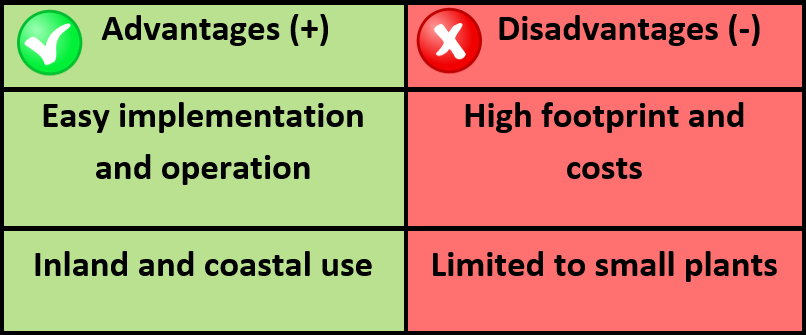
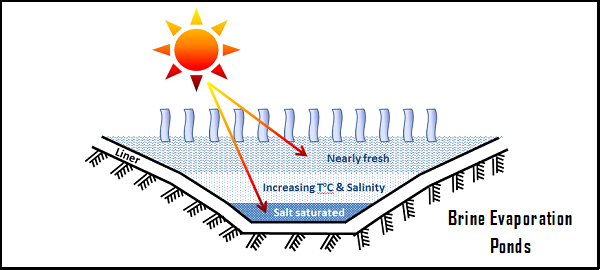
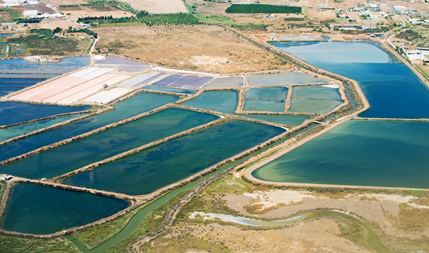
Buharlaşma havuzları, konsantre maddenin güneş ışınımı sonucu doğal olarak buharlaştığı sığ, toprak kaplı havzalardır. Havuzlardan tatlı su buharlaştıkça, konsantredeki mineraller tuz kristallerine çökelir; bu kristaller periyodik olarak toplanır ve tesis dışına atılır. Buharlaşma havuzları şu şekilde sınıflandırılabilir:
1) Geleneksel
2) Güneş tuzluluk gradyanlı
Geleneksel buharlaşma havuzları yalnızca tuzlu su bertarafı için tasarlanırken, güneş havuzları güneş enerjisinden elektrik üretir.
- Potansiyel Çevresel Etkiler
Genellikle kalite yönetmelikleri, alttaki akiferlerin korunması için buharlaşma havuzlarının geçirimsiz astarla inşa edilmesini gerektirir. Tuzlu su yüksek konsantrasyonlarda toksik kirleticiler (örneğin yüksek düzeyde eser metaller) içeriyorsa, çift astarlı bir havuz inşa edilmesi gerekebilir.
Eğer havuzlar astarla kaplanmamışsa veya astar noktası hasar görmüşse, tuzlu suyun bir kısmı havuzun altındaki su akiferine sızabilir ve su kalitesini bozabilir. Bu nedenle, astarın altına yerleştirilen yeraltı sızıntı tespit sistemleri veya en az 3 yeraltı suyu izleme kuyusu sistemi kullanılmalıdır; bunlardan biri yeraltı suyu akışının yukarısına, biri aşağısına ve biri de havuz sisteminin ortasına yerleştirilmeli ve aylık okumalar yapılmalıdır.
- Fizibilite Değerlendirmesi için Kriterler ve Yöntemler
Buharlaşma havuzları, daha yüksek yerel sıcaklık ve güneş ışınımı ile iklime bağlıdır ve bu da bize daha yüksek buharlaşma oranları sağlar ve bu tuzlu su bertaraf seçeneğini daha uygulanabilir hale getirir. Genel olarak, güneş buharlaşması yalnızca nispeten sıcak, kuru iklimlerde,
- yüksek buharlaşma oranları
- düşük yağış oranları
- düşük nem
Ayrıca düz bir araziye ve düşük arazi maliyetine ihtiyacımız var. Bu tuzlu su bertaraf yöntemi, yıllık buharlaşma oranı < 1,0 m/y ve yıllık yağış oranı > 0,3 m/y olan bölgeler için uygun değildir (yüksek yağış oranı buharlaşma oranlarını düşürür).
Nem oranı ne kadar yüksekse, buharlaşma oranı o kadar düşük olur. Ortalama yıllık nem oranı %60'ın üzerinde olduğunda, buharlaşma havuzları uygun bir tuzlu su bertaraf seçeneği değildir.
Havuzlardaki katı madde ve tuzluluk seviyeleri arttıkça buharlaşma oranı azalır, bu nedenle tuzlu su hacminin en aza indirilmesi faydalıdır.
- Buharlaşma Havuzu Maliyetleri
Buharlaşma havuzlarının maliyetini etkileyen ana faktörler şunlardır:
- buharlaşma oranı (yerel iklim)
- tuzlu su hacmi ve tuz konsantrasyonu
- arazi ve toprak işleri maliyetleri
- astar maliyetleri
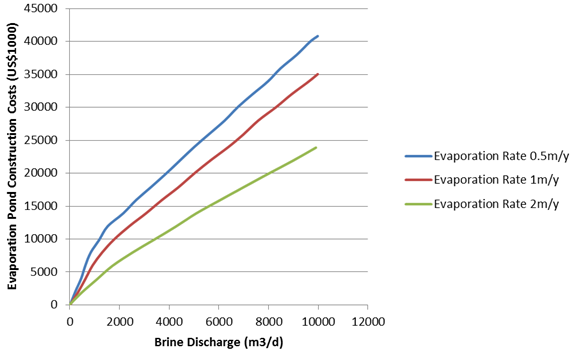
Şekil 1, buharlaşma hızı ve konsantre akışına bağlı olarak bir buharlaştırma havuzu sisteminin inşaat maliyetine ilişkin kaba bir yaklaşım sunmaktadır.
 Tuzlu Su Buharlaştırma Havuzları