

Tuzlu Su Derin Kuyu Enjeksiyonu

- Potansiyel Çevresel Etkiler
- Fizibilite Değerlendirmesi için Kriterler ve Yöntemler
- Enjeksiyon Kuyusu Maliyetleri
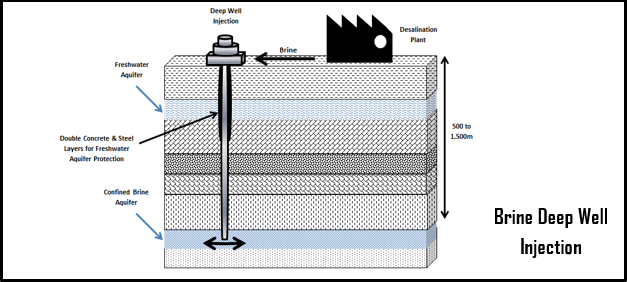
Bu sistemde, her büyüklükteki tesisten elde edilen tuzdan arındırılmış tuzlu su, yukarıdaki tatlı su veya BW akiferlerinden ayrılmış, yeterli derinlikte (500 ila 1500 m) bir yeraltı akiferine enjekte edilir.
Tuzlu su bertaraf kuyuları tipik olarak üç veya daha fazla konsantrik boru katmanından oluşur: yüzey muhafazası, uzun boru hattı muhafazası ve enjeksiyon borusu. Derin bir enjeksiyon kuyusu, bir kuyu başlığından (gerekirse pompa ile donatılmış) ve çok katmanlı muhafaza ve harçla korunan astarlı bir kuyu şaftından oluşur.
Sığ sızma plaj kuyusu sistemleri de kullanılabilir. Plaj kuyusu bertarafı, tuzlu suyu nispeten sığ, sınırlı olmayan bir kıyı akiferine boşaltır ve bu akifer, tuzlu suyu nihayetinde dip tortuları yoluyla açık okyanusa taşır.
Deşarjlı plaj kuyuları esas olarak küçük ve orta ölçekli tuzlu su arıtma tesislerinde kullanılır.- Potansiyel Çevresel Etkiler
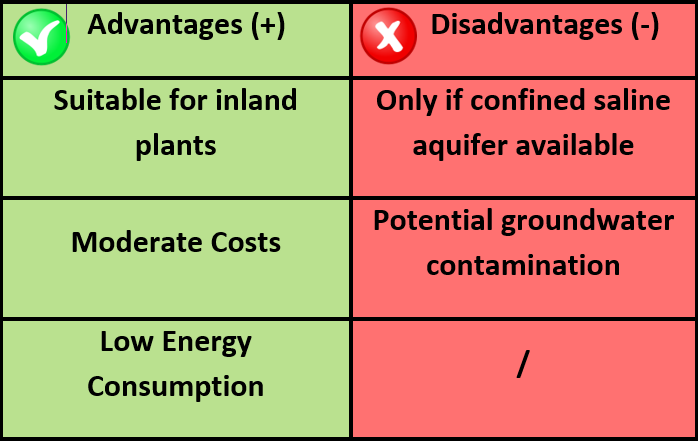
Amerika Birleşik Devletleri'nde derin kuyu enjeksiyon yöntemiyle tuzlu suyun bertaraf edilmesinin 20 yıllık deneyiminden, çevre için olumsuz etkilerin düşük olasılığıyla güvenilir olduğu kanıtlanmıştır. Ancak uygulama planlaması sırasında, tuzlu suyun yukarı doğru göçüne ve sığ akiferlerin olası kirlenmesine izin verebilecek aşağıdaki faktörlere dikkat etmeliyiz,
- Korozyon veya aşırı besleme basıncı, enjeksiyon kuyusu muhafazasının arızalanmasına ve tuzlu suyun kuyu deliğinden sızmasına neden olabilir
- Tuzlu suyun kuyu muhafazasının dışına, sığ akifere dikey olarak yayılması
- Üstteki sınırlayıcı tabaka yüksek geçirgenliğe, çözünme kanallarına, eklemlere, faylara veya kırıklara sahipse, dikey tuzlu su göçü meydana gelir
- Uygunsuz şekilde çimentolanmış veya tıkanmış veya yetersiz muhafazaya sahip yakındaki kuyular, enjekte edilen tuzlu su için bir yol sağlayabilir
Kuyu işletimi sırasında, tuzlu su akışı ve kuyu başı basıncı sürekli olarak izlenir. Sabit çalışma sırasında artan basınç, olası tıkanmayı gösterebilirken, basınçtaki ani bir düşüş, muhafaza, harç veya sızdırmazlık içinde sızıntıları gösterir. Ayrıca, kuyunun yeraltı topraklarına veya su kaynaklarına sızmadığından emin olmak için aylık testler yapmalıyız. Tıkanma, kirlenme ve tuzlu su akış hızlarında ve basınçlarında geniş varyasyonlardan kaçınılmalıdır. Tıkanma, bakteri üremesi, askıda katı madde çökelmesi veya içeri çekilen hava nedeniyle olabilir.
- Fizibilite Değerlendirmesi Kriterleri ve Yöntemleri
Tuzlu su bertarafı için derin kuyu enjeksiyon sistemlerini uygulamak için, iyi toprak geçirgenliğine sahip, büyük depolama kapasitesine sahip kapalı akiferlere sahip olmalıyız. Depolama ve tatlı su akiferi arasında doğrudan hidrolik bağlantıya neden olabilecek yüksek sismik aktivite alanlarından veya jeolojik faylara yakın bölgelerden kaçınmalıyız.
Genellikle mevzuat izinleri, depolama akiferinin geçirgenliğini ve TDS değerini, alıcı akifer ile yapısal olarak yalıtıcı ve sınırlayıcı bir tabakanın varlığını ve üstte < 10.000 mg/L TDS değerine sahip bir tabakanın varlığını gerektirir.
- Enjeksiyon Kuyusu Maliyetleri
Derin enjeksiyon kuyusu maliyetleri esas olarak kuyu derinliğinden ve kuyu borusunun ve muhafaza halkalarının çapından etkilenir.
Aşağıdaki tablo, tuzlu su deşarj akışına (m³/gün) ve kuyu derinliğine (m) bağlı olarak derin enjeksiyon kuyularının inşaat maliyetlerine ilişkin kaba bir yaklaşım sunmaktadır.Tablo 1, Tuzlu Su Bertarafı İçin Derin Enjeksiyon Kuyularının İnşaat Maliyetleri
|
Kuyu Çapı (m)
|
Tipik Deşarj Kapasitesi (m3/gün) |
Tuzlu Su Miktarına Bağlı Olarak İnşaat Maliyetleri ($) Akış Hızı, Q (m3/gün) ve Kuyu Derinliği, H (m) |
|
100 |
1,000-2,000 | 165 x Q + 310 x H + 100,000 |
|
200 |
4,500-6,500 | 180 x Q + 1,250 x H + 160,000 |
|
300 |
10,000-15,000 | 165 x Q + 2,000 x H + 290,000 |
|
400 |
15,000-30,000 | 160 x Q + 2,800 x H + 330,000 |
|
500 |
30,000-50,000 |
150 x Q + 4,500 x H + 370,000 |
 Tuzlu Su Derin Kuyu Enjeksiyonu